Friday, October 18, 2013

Learning from Crits

At Illuxcon I received a lot of really helpful advice on my portfolio, and since getting back I've been working on fixing up some of the problems people pointed out in my work as well as trying to polish them up and make them nice and sparkly. In this post I'll be sharing some of the feedback I recieved on some of my work as well as before-and-after shots. Hopefully some of you can get something out of the seeing the upgrades to my own work.

First up is my Owlbear piece. This piece has gone through revisions before. During my first pass at revising this piece I mainly focused on adding some more detail and finesse, but during my portfolio review with Robh Ruppel I learned a few new things I could do to make the piece really pop more. Mainly adding more muscle definition in the extended arm to really give a feel of action and ferocity.
Before crits

After crits

Notes
Next up, my Feiya piece, done as a promotional piece for Paizo. Again, I've reworked this one before too, just pushing the detail and refining some things. Some people suggested I push the slime a bit and make it more detailed.
Before crits

After crits

Notes
Next up is my Dream Devouring Demon. The dream-catcher webbing had a lazy execution first time around so I went in and really looked at a good dream-catcher for reference. After fixing it I was immediately much more satisfied with the result. It's amazing how something that seems so unimportant at first makes such a huge difference when done right. I was also told by many people that I need to focus on varying up my colors more and adding hue shifts throughout a material. It shouldn't always be "this is this color, this is that color" everything should have some other colors poking through here and there to add interest and realism to what you're painting.
Before crits

After crits
Notes

Up next, is the Man form of my Beastmaster. I got a lot of really helpful notes on this piece, but not all of the problems were fixed in the end. Sometimes it's better to take the lessons you've learned from an old piece and just apply that information towards your future work. From crits on this piece, I learned a lot about how you should arrange your values in a piece. Your focus should have the most contrast (darkest darks and lightest lights) but in this piece the bushes are really fighting with the figure for attention due to how dark they are. I worked on adjusting the values of the bushes and I even did some reshaping to them so they weren't creeping up on the figure so much, but in the end I was only able to do so much without completely repainting those areas. I definitely learned a lot from this piece due to the failures within.
Before crits
After crits

Notes


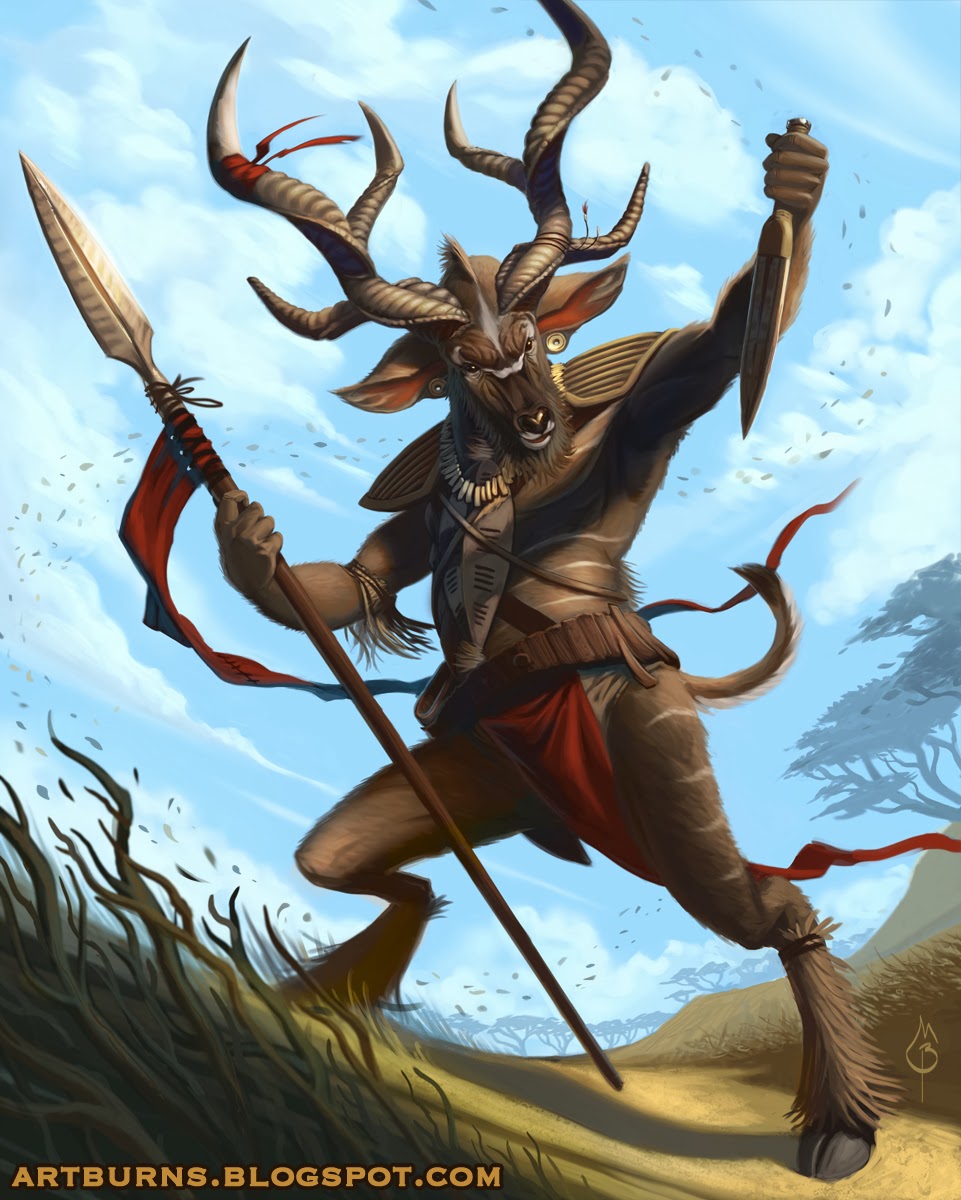
Lastly, the piece that headed my portfolio and received the greatest response from people I showed my portfolio to, my Beast-form Beastmaster. A lot of the feedback I received for the man-form Beastmaster piece applies to this as well, but I was able to fix a lot of those problems a little better with this piece. First of all, I had a lot of tree braches just poking into the image, somewhat awkwardly and it took away some of the impact of the composition and took attention away from the focus, so I just took them out and everything immediately started to feel better. I also tried to lighten up the foreground so it wasn't competing with the figure for attention so much. Chris Rahn was a huge help on this piece too. You can see in a lot of his work he really punches up the saturation and color in the shadows of his work and it creates a big impact on the viewer. This is something I hope to bring into all of my future work, so I'm excited to do some more original pieces.
Before crits

After crits

Notes

Side-note about this piece, I attended New York Comic Con last weekend where I got to meet one of my favorite artists, Dave Rapoza, and he mentioned that he was a fan of the triangle composition in this piece. The reason I mention this is because I had no idea that was what I had done in this piece, it wound up being a happy accident that I came up with a strong composition. When you are looking for feedback on your work (or even giving feedback to someone else) I think it's a good idea to say what you think is working just as much as what isn't working. Sometimes we do things well without even thinking it through and then we don't ever go back to it because we hadn't realized what was so good about it. It's good to know what you've done right so you can keep doing it as well as what is wrong so you can work eliminating the problems in your work.

The biggest thing I learned from all of my crits is that I tend to stop working on a piece when it's about 90% done. I'm the kind of person who always tries to finish a piece in as few sittings as possible so I tend to convince myself it's good enough without really pushing pieces to their full potential. My reworking of these pieces was my way of trying to see just how far I can really push my work if I give it all the time it needs. Looking at all of these before-and-afters reminds me that I really need to not focus on rushing to a piece's end, but more focusing on getting everything just right and working out all of my problems.

I hope you enjoyed this post and are able to apply some of the lessons I've learned to your own work. Thanks for reading!

Monday, September 23, 2013

My Illuxcon 6 Notes are up for grabs


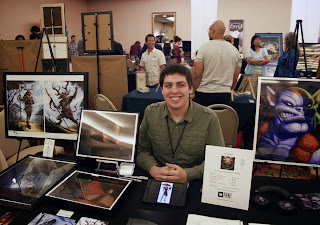
Me and my Showcase table (night 2: Return of Jafar) Photo courtesy Will Dudla
Today marks one week since Illuxcon 6 ended, and man this year was the best one yet! Hopefully at some point I'll get a chance to come up with a post that chronicles my con week but until then I just wanted to share the notes I took while at the con.

With so many great demos and lectures to attend and a lot of them overlapping, or with having to leave in the middle of one to have a portfolio review, there's always been this slight frustration that I'm missing out a little. I shared my notes from last year's IlluXcon and I got some good feedback so I thought I'd try it again this year in case anyone missed out on something they wanted to attend. I know my notes can never live up to actually going to the events themselves but hopefully some of you can get something out of what I wrote.

Below you'll find my notes which you can read right here on my blog, or if you prefer to have them on your computer you can click on the link below to access a Dropbox folder where you can download a .doc file containing my notes from Illuxcon 6 as well . Let me know if you're able to get anything out of it as well. Enjoy!

Illuxcon 6 notes (.doc file):

 
Mike Burns’s Illuxcon 6 Notes                             artburns.blogspot.com


How to Build a Portfolio: Jon Schindehette & Lauren Panepinto

A Portfolio is…
            - A collection of your best work
            - Targeted at a specific ‘market’ or ‘client’
            - Has a ‘purpose’

In order to create the most successful portfolio for yourself you have to answer the question “What do you want to do?”

Make sure to have leave behinds for your portfolio reviews. It gives the art director something to remember you by, and they can write notes about your work on the back.

Put your best work first.

An art director will decide yes or no based on your first image, the rest of your portfolio is just to show consistency in quality.

Order the work in your portfolio based on quality and flow rather than by grouping the horizontals and the verticals.

Don’t print your horizontal pieces on two separate pages and have to view the piece across a two-page spread. Keep one image on one page.

Don’t print horizontal images smaller so that the art director doesn’t have to turn the book, it’s more important to see the image large. It’s part of the art directors job to turn the book if necessary, it’s not as bad as it may seem.


Important points for doing work for Magic: the Gathering. Their art requires strong composition, strong outlines, and strong contrast. Magic cards must have a quick read. The art must be readable upside down, from across the game table.


Figure Drawing Demo: E.M. Gist

When drawing the waist, it’s better to build it up from 2 triangles rather than just two parallel lines.

Remember that everything under the skin connects and overlaps, and the skin lays over everything, revealing what’s underneath.

Mass = Effect of light on structure

Most important parts to a dynamic pose: Head, Ribcage, Hips

When drawing from life/reference, if a shadow/detail on the model would appear awkward in your drawing, don’t draw it exactly the way you see it, adjust what you see so it appears comfortably in your drawing.


Concept Art Vs. Illustration: Jon Schindehette & Robh Ruppel

Illustration = the end product is the final piece
Concept Art  = the process is the final piece

Concept art says, take an idea that’s /-------------------this general-------------------/
…and narrow it down to something /-this specific-/

In order to make it in the art world, you need to find the one thing that you want to do and be best person at it, Make people seek you out for that one thing, then start to build up your other skills / fields (for example get really good at environments so you can start getting work for that, then start building up your other skills

When you’re given an art test to do for a company, it isn’t just about skill, it’s also about how you think. If an AD gives you 3 items that take up to 72 hours of work to do in the span of 24 hours, they are trying to see how you’ll split up your time. Will you spend all of your time on just 1 item? Will you split up your time equally among all 3 items? Why? Make decisions based on making the highest impact.

If you have 10 things you need to do, but you only have time to do 3, how are you going to decide what you wind up doing. What gets done and what does not. You never have enough hours in the day to do everything, so you have to be good at making the decisions of how to approach what you have to do.

Jon stated that illustrations for him come in a 4-step process:
1. Thumbnail
2. Detailed Drawing
3. Color Studies
4. Final

Take some time to think about how to get the job done.

Figure out what process works for you. Everyone has his or her own workflow, there is no right way other than what’s right for you.

Concept artists are mainly broken up into 2 groups: Character people & Environment People

Character artists need to focus on: action shots, gesture, and expression

Environment artists need to show that they understand how the real world is put together (how does a bush fit into the ground), focus on the size of bricks, floor planks, etc. in relation to size of the character occupying the space.

Biggest environment no-no: Generic – think about how the buildings are held up, what are they made of, does it fit into the setting? Don’t just think “I want to make a cool looking castle” look at real castles and learn why they look the way they do, how they’re built, etc.

Carry a sketchbook to help you understand your world. A sketchbook shouldn’t just be considered a book full of pretty drawings, it’s not just to build up technical skill, it should be considered an examination tool.

When using reference from the real world in a fantasy setting, aim for making the viewer feel “this kind of reminds me of…”

Accurate details & Abstract shapes. You want to aim for believable scale and detail while also having interesting shapes.


Painting Between the Lines: Donato Giancola:

When tackling a book cover illustration, you don’t always have to pick a climactic moment. Take a non-important moment in the story, and try to capture the essence of a character.

Focus on in-between/mundane moments and elevate them.

Take on the biggest challenges in your work today, It will force you to learn and push yourself and your work forward.

Find ways to throw curveballs at your viewers.


Drawing and Inking Demo: Sean Murray:

Sketching is less about practicing technique and more about generating ideas.

Perspective is about thinking

Travel the world using Google Earth, walk through a new part of the world to help influence your work and make your own worlds more lush.

Niko-G Pen & Holder (Sean’s tools for inking)

Digital line work: Brush settings at less than 100% opacity and not 100% black, gives it more of a traditional inking feel.

Sean prefers to eliminate the white of a drawing instead of setting the drawing layer to a Multiply layer.


Magic: The Questioning: Winona Nelson, Anthony Palumbo, Jeff Menges, Karla Ortiz, Cynthia Sheppard, Dave Palumbo, Randy Gallegos, Steve Belledin, Donato (I think that’s everyone:

Maintain a professional relationship with all clients, they will help you down the road. Everyone talks to everyone in this industry so don’t burn your bridges.

Don’t let jobs push your portfolio in the wrong direction (something you don’t want to do) learn when it is wiser to say no, but keep in mind too many ‘no’s will make them think you don’t want to work with them.

Communicate, ask questions. An AD would rather answer an email than have to fix a problem that could’ve been prevented sooner.

6 week turn around (usually) 2-3 cards assigned per set of work, each set is commissioned in 2 waves.

Silhouette and shape are the most important things to focus on. Card must be readable from upside down and across the playing table.

Tuesday, September 10, 2013

Twas the Day Before IlluXcon

Twas the day before IlluXcon, 
when all through my mind,
I was so freaking excited, 
can't wait for good times.

Excuse that awful joke. It's the Eve of IlluXcon and I'm getting super excited! I've been waiting for this convention to come back around since the last one. While getting all of my stuff ready for the con, I realized I wanted to have a little more to have on display at my Showcase table so I spent the past couple weeks working up some original drawings for people to look through, which will also be available for purchase.

Below, you can see all of the drawings I did. If you'll be at IlluXcon this week and you like what you see, swing by my Showcase table and grab some for yourself!


Friday, August 30, 2013

Update...Illuxcon 6 is approaching...

I have had a crazy past couple of months both in good and bad ways. I've been a bit stressed trying to get all of my work and preparations for Illuxcon done in time. But finally, things are starting to look up, and I'm just about all caught up on everything and I'm starting to feel ready to attend Illuxcon 6 starting Sept 11th!
For those of you who don't know, Illuxcon is the fantasy sci-fi art convention. Here you'll see tons of traditional and digital artwork from some of the best names in the industry as well as those up-and-coming artists trying to break their way into the industry as well as art collectors and enthusiasts. This year will be Illuxcon's first year in it's new location of Allentown, Pennsylvania, which is conveniently 4 hours closer to me than the previous location, Altoona, PA. This year is going to be even bigger and better, taking place in the Allentown Art Museum which will offer much more space to pack in even more awesome artists and their artwork.

There will be 3 sections of the show, the Main Show (which runs all 5 days), the Weekend Salon (Sat & Sun) and the Showcase (Fri & Sat). I will be participating in the Showcase for my 2nd time this year and I have a lot more work to show off as well as a bunch of large scale prints available for purchase as well as some other goodies, you'll just have to stop by and see for yourself.

I really can't wait for Illuxcon to be here, I'm sure I will have tons to write here upon my return. If you'll be in attendance as well I hope to see you there!

Wednesday, August 21, 2013

The fear of blood tends to create fear for the flesh - Silent Hill 1 Still Life

I just can't get enough Silent Hill in my life, as you can tell by my latest personal piece. Yet another Silent Hill inspired still life.
Silent Hill 1 Still Life
This one is based on the very first game in the series. The piece features 7 key items found throughout the course of the game. I posted a challenge over to my personal Facebook page to see if any of my Facebook friends could name all of the items in the piece, with bonus points going to anyone who can name the location.
Did you come up with any answers? Take a look and see how you did!
Here's some details about the items:
1 - Harry finds a page from Cheryl's sketchbook in the alley near the beginning of the game leading him to visit Midwich Elementary.
2 - Key found in Balkan Church, used to lower the drawbridge that leads into Central Silent Hill.
3 - The Flauros is given to you by Dahlia Gillespie, and is used to stop Alessa late in the game.
4 - Map found in the Cafe at the start of the game.
5 - This vial is found in a black plastic bag, hidden in a motorcycle at the motel where Dr. Michael Kaufmann was staying. Kaufmann uses this item to expel the demon god from Alessa at the end of the game.
6 - The radio Harry finds at the Cafe at the start of the game, emits static when monsters are near.
7 - These notepads are scattered through the game and used as save points. The idea is that Harry is recording the strange events he's experiencing.
- The location is hinted at by the bottom tip of a cross in the background, the podium, and both the Flauros and the drawbridge key are found there. I realize this is extremely subtle but I thought it could be figured out.

Whether you took a stab at the challenge or not, I hope you like the new piece! It was a lot of fun to work on and geek out with. I hope any Silent Hill fans who may pass by this can get some enjoyment from it. Thanks for looking!

Monday, August 19, 2013

Dale Jr. Skulls - Sketches & Items Available for Purchase

Final rendering

I thought it would be fun to post the sketches I submitted for the Dale Jr Skulls. If you missed the last post, make sure to check it out here to find out more about the specifics of the job.
Skull Sketches
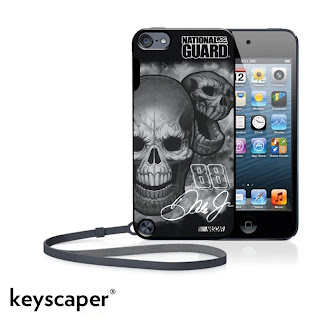
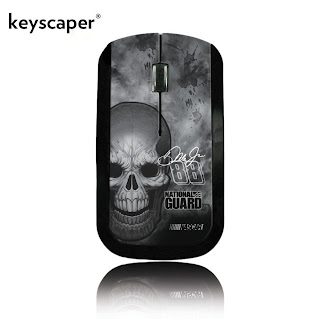
Some additional news, all of the products featuring my skulls have become available for purchase on the Keyscaper website! Click on the image of each product if you're interested in owning one of the items.
Desktop Calculator

USB 8G Flash Drive

DJ Style Headphones

iPad Mini Case

iPad 2+ Case

iPod Touch 5G Case

iPod Touch 4G Case

Wireless USB Keyboard

Kindle Fire HD 7 Inch Case

Original Kindle Fire Case

Wireless USB Mouse

Bluetooth Speaker